
You might get different answers for when autumn begins. Meteorologists would say September 1st. Astronomers would say the equinox for September, which is around 22nd-23rd September. We look at what each of these means and go through which is best to use.
What Meteorological Autumn Means
Meteorological autumn is defined as the three months from 1 September to 30 November. This allows temperature records, climate statistics and weather summaries to be compared over long periods of time and is based on the Gregorian calendar which divides the year into four seasons of three months each. The Met Office states that the start of seasons is defined as per the above and details why seasons defined by astronomical events are not as suitable for long-term climate data.
What Astronomical Autumn Means
Astronomical autumn starts with the equinox of September, which is on 22nd or 23rd September in any given year. The length of the Earth’s orbit is not exactly equal to a number of days, and so the Earth’s position in space with respect to the Sun shifts slightly from year to year. So, the start of astronomical autumn is roughly three weeks earlier than the start of meteorological autumn. It continues until the winter solstice in December.
Why The Two Systems Disagree
There is a gap between the two systems. The meteorological seasons are defined by reference to the calendar, with four seasons of roughly equal length, each of some 90 days or so. They are a system developed by scientists to help them study and track weather over long periods of time and so provide useful climate statistics. The astronomical seasons, on the other hand, are defined by reference to the Earth’s position in space and so mark the moments when the Earth’s tilt and orbit result in changes to the length of the day and the path that the sun appears to follow across the sky.
What Happens At The Equinox
The word for an equinox is derived from the Latin word for equal night. It’s the point at which the sun crosses the celestial equator and moves from the northern half of the Earth’s surface to the southern half. After the equinox the nights start to get longer than the days and this continues until the winter solstice in December.
How Day Length Shrinks Through Autumn
Within a few days of the equinox the nights will start to be noticeably longer. For a few days around the equinox the UK will lose around 4 minutes of daylight each day. By mid October the rate of decrease in daylight hours will start to slow down but there will still be a marked difference between the early hours of the morning in late September and the start of a dark winter’s day by half term. More on the seasons, including the change in temperature as well as daylight hours, on the Met Office website.
What September Weather Typically Looks Like
September starts with warm days, often reminiscent of late summer. But by the second half of the month things start to change. September weather can be unsettled, with an increase in rainfall. Low-pressure systems, typical of autumnal weather, start to arrive from the Atlantic. It’s rarely extreme but the temperature drops, especially at night, and it soon becomes apparent that autumn has arrived. The first frost of winter can appear in late September or early October in parts of Scotland and northern England. Down in the South of England it may not feel quite so chilly for a bit longer.
Signs Autumn Has Properly Arrived
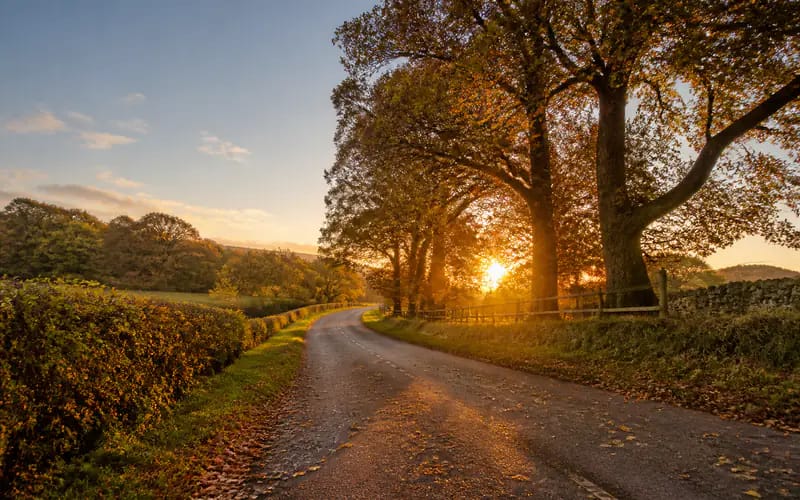
But it’s not just about the temperature dropping. There are all sorts of signs that autumn has arrived. For a start, the leaves on the trees will start to change colour and fall from the branches. Fungi will start to appear in the woods and birds will begin to migrate, travelling to warmer parts of the world for the winter. For more signs of autumn, visit The Woodland Trust’s website where you can find out everything from the first conkers of the season to blackberries ripening on the hedgerows.
Which Date Should You Actually Use

Whether you use the date of the equinox for stargazing or to measure the position of the sun, or whether you use the start of the season on the calendar for seasonal weather forecasts or for recording climate data, the key point is that for casual conversation, most people refer to the start of the season as being on 1 September for meteorological autumn. This is often simply because it is the easiest date to remember, as it is at the start of a new month of the year.
Autumn At A Glance
Seasons – Meteorological Autumn: 1 Sep to 30 Nov.
Astronomical autumn: commences at the September equinox and extends until the winter solstice in December.
Why the dates differ: one for the purposes of keeping climate records as consistent as possible, the other for determining the Earth’s seasons as determined by the Earth’s tilt and its orbit around the sun.
Equal nights: The night becomes as long as the day at the equinox. This is followed by nights getting longer and longer until the winter solstice in December.
While the meteorological term may differ from the more generally used term, there is no difference in the signs of autumn. We have cooler mornings, shorter days, and a change in the feel of the air, signalling the end of summer.