What Temperature Causes Pipes to Freeze
Water pipes in the UK typically start to freeze when the air temperature around them has stayed at 0°C or below for several hours. It is not necessarily the lowest temperature of the night that causes pipes to freeze but how long it is at that temperature, particularly in unheated parts of the house.
The Real Freezing Threshold
This temperature is the starting point for pipe freeze risk but does not give the full picture. A pipe can drop in temperature over hours and can freeze at temperatures above 0°C, especially if it is exposed for long periods. Once the temperature drops below -4°C to -6°C for any period of time, even partially protected pipework can be at risk of freeze damage. Note that ‘feels like’ temperature is based on wind chill which affects human skin but not sealed pipes within walls or lofts. The risk of pipes freezing is based solely on the actual air temperature at the point where the pipe is located and for how long it is exposed to that temperature.
Which Pipes Are Most At Risk
The following types of pipe run are more exposed than others and more likely to freeze: loft pipe runs; external wall pipe runs (particularly older property with poor external wall insulation); garages; outbuildings with cold water taps (and associated washing machines etc); internal pipe runs (within heated buildings) running along external walls of kitchens and within cold areas such as cupboards under sinks on external walls. These can freeze when doors are closed and cold air is trapped within the cupboard.
Signs A Pipe Has Frozen
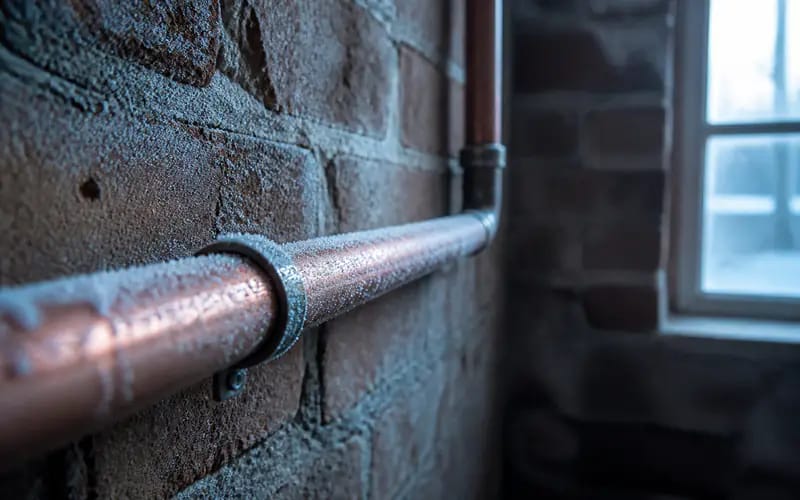
You may be able to spot frozen or burst pipes, especially exposed ones outside. Check for frost or ice forming on exposed pipework. Within your home, a frozen pipe can sometimes cause your boiler to lose pressure and then shut down to prevent damage. Met Office advice on frozen or burst pipes reports that people who have suffered from frozen or burst pipes report that a tap that used to work had stopped working, or that only produced very little water. A burst pipe is often worse than it looks at first, as there can be more damage than initially appears.
Getting Ready Before A Cold Spell
If you have not already, lag loft pipes and tanks with foam pipe insulation (available from most hardware stores for a few pounds per meter). Similarly, make sure that outside exposed stop valves and exposed outdoor pipes are also insulated. Opening loft hatch a crack can also help to allow warm air to rise up to pipes in loft. Also, rather than switching off your heating at night, switch to a low temperature to keep costs down. Open cupboard doors to expose outside wall pipes to warm room air.
Find Your Stop Tap Now
Inside your property there should be an internal stop tap to your water supply. This is usually located under your kitchen sink but can also be under the stairs, in a utility room or even near a front door. Make sure it opens up freely by turning it clockwise before it is needed in an emergency situation. If it has not been moved for some time and is stiff, use some penetrating oil and turn slowly. If it still will not open up it is probably better to get it looked at before winter sets in rather than in an emergency situation when you need it most.
The Boiler Condensate Pipe Problem
One of the most common reasons for a working plumber to be called out in winter is for a boiler to have stopped working. On closer inspection it is found to be a result of a frozen condensate pipe. This is the thin plastic pipe which carries waste water from the condensing boiler outside. It is usually located at the back or bottom of the boiler and runs along an external wall before dropping down into the ground and into the drain. In the event of very cold weather the water within this pipe can freeze solid. The boiler will then switch off in order to prevent any further damage. It is wise to check this pipe first when a boiler has stopped working in cold weather.
Thawing A Pipe Safely
Turn off the stop tap to the affected pipe(s). Try to open the nearest cold (outside) tap(s) to allow water to flow when the pipe(s) thaw. Use hot water, towels soaked in warm water or a hot water bottle. A low powered hairdryer may also be used to thaw a frozen pipe. Do not use a blowtorch or any other open flame to thaw a frozen pipe. A blowtorch can burn, damage surrounding objects or even start a fire. Uneven distribution of heat can also cause serious damage to the affected pipe(s).
When It’s Actually Burst
Once a pipe has actually burst however, the situation is completely different. Water will normally flow from the affected area(s) and there can be more water coming out than expected from the apparent damage. This water will normally need to be turned off at the stop tap. After this, the water must be allowed to drain from the system, and then, if any of the affected pipes are near to electrical equipment such as sockets, switches etc., then the relevant power must be switched off at the Consumer Unit (also called the Fuse Box). After this, it is sensible to call in a fully qualified plumber who is approved by WaterSafe. For advice on what to do regarding a freezing and/or burst pipe in a housing context, including advice on who is responsible, refer to the relevant housing guidance on the Citizens Advice website.
Decision Framework
Pipe burst: turn the stop tap off, drain the system by running the taps, switch off the electrics near any leak, and call a WaterSafe-approved plumber.
Burst Pipe: Turn off the stop tap to the pipe. Run the cold taps in the house to drain the pipe of water. Switch off the electricity supply at the main fuse board if the leak is near any sockets, switches, etc. Call in a WaterSafe-approved plumber to repair the pipe.
Boiler stopped in a freeze event: Check external condensate pipe first before diagnosing problem with boiler.
Before the weather turns make sure loft pipes and tanks are protected with insulation, locate and check that you can turn your external stop tap(s) and also consider whether other outside pipes (such as condensate pipes from household appliances such as condensing boilers) may also need protection. Further housing maintenance advice is provided via the GOV.UK housing pages and the Health and Safety Executive’s guidance on cold temperatures and water systems may also be of use should you be responsible for rental or business premises as well as your own home.