
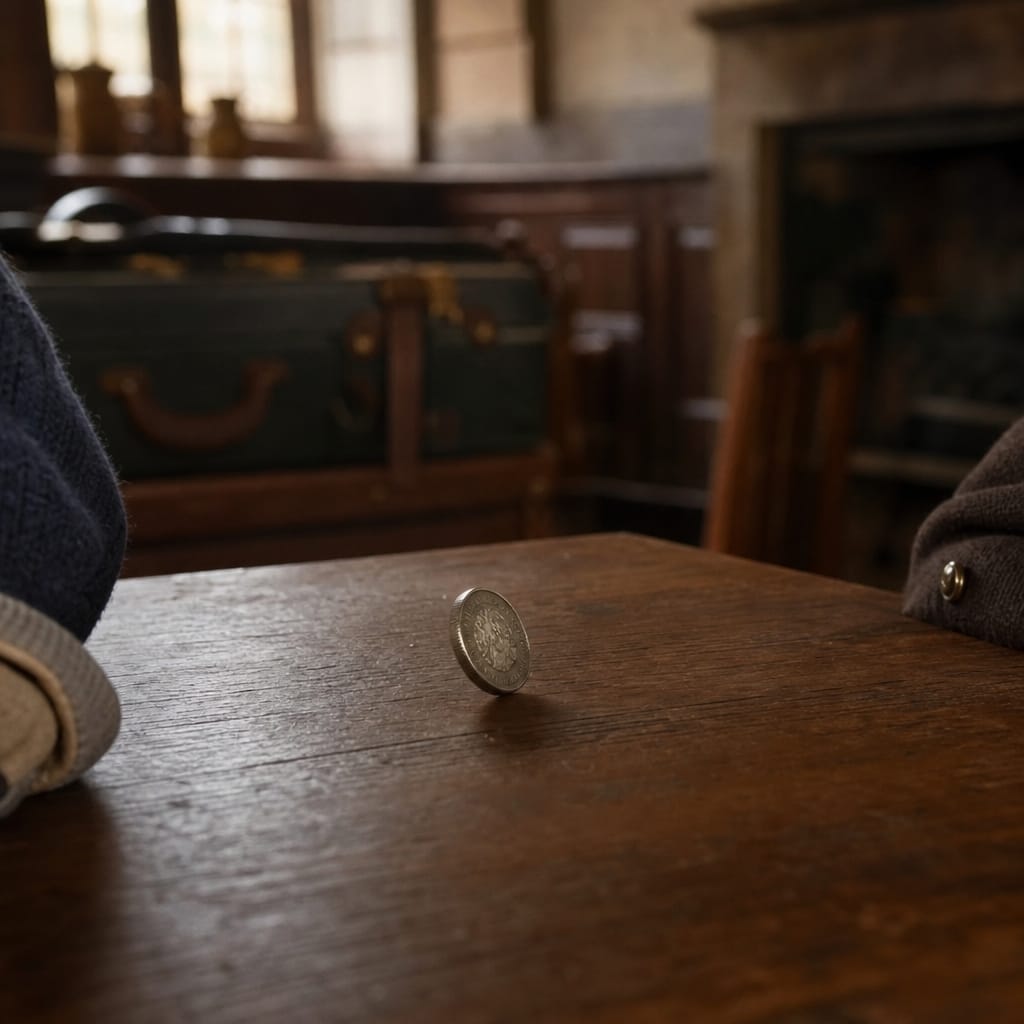
Picture it: a Georgian coaching inn somewhere in the Midlands, the horses have just been changed, your bags are being shuffled, and someone is doing something slightly peculiar with a coin. Not handing it over – that would be vulgar. Not pocketing it – that would be theft. Instead, they tilt it sideways on a wooden surface and let it spin across the gap between two people, so that by the time it lands, neither party quite has to acknowledge what just happened. The coin has moved. Favour has been greased. Nobody has been embarrassed. This, apparently, is where the word "tip" most likely comes from: to tip, as in to tilt or overturn. The whole history of British tipping is already in that one gesture.
The House Guest Who Had to Pay the Servants
Before coaching inns, before restaurants, the system that shaped British tipping was the aristocratic household. If you were invited to stay at someone's country house – a significant honour – you would expect to use their staff. And their staff, who were nominally employed by your host, expected to be compensated by you for the privilege. These payments had a name: vails. They were not optional. They were effectively a toll on borrowing someone else's labour, and failing to leave the right amount was a class catastrophe in both directions. Too little, and you were mean. Too much, and you were trying too hard.
This is the sediment that British tipping is built on. You can still feel it pressing up through the floorboards of every restaurant in the country. It was never really about generosity. It was about working your way through a very specific social code without giving yourself away.
The Different Soil America Was Planting In
American tipping came from somewhere completely different. After the Civil War, restaurant and hospitality employers – particularly in the South – used the existence of tips as justification for paying Black workers wages so low they barely existed. The tip became structurally load-bearing in a way it never quite was in Britain, which is partly why the American tipping floor is so much higher (twenty per cent is the floor, not the ceiling), and why the British traveller in a New York diner looks faintly panicked by the maths.
British tipping evolved from aristocratic obligation, filtered down through the coaching inn, and eventually arrived at the modern restaurant, where it shed most of its logic but kept all of its awkwardness.
The Specific British Freeze
You've felt it. The card reader is turned around to face you, and there are three options: no tip, ten per cent, fifteen per cent, or – and here we go – a custom amount. You are now doing three calculations simultaneously: deciding whether the service was good, deciding what kind of person you want to be seen as, and deciding, in some low-level background hum, what the amount you choose says about your class, your income, your relationship to the person standing three feet away pretending to study the wall.
This is the direct descendant of the vail. The anxiety is not about the money – the money is almost beside the point. The anxiety is about the signal: am I too grand, am I too meagre, am I making this weird? It is the same stratum of social geology that produced the unspoken British pub-round system. Nobody quite wants to be the one who hasn't bought a round. Nobody wants to make a fuss about it either. The coin spins. Nobody acknowledges it. The moment passes.
What the Spinning Coin Was Actually For
The genius of the original tipping gesture – the coin tilted across the surface so it slid rather than was handed – is that it preserved the dignity of everyone involved. The recipient didn't have to stand there with their palm out. The giver didn't have to be seen paying for something that was not, officially, for sale. A small social fiction was maintained, and both parties could carry on.
That fiction has frayed quite badly since the card reader arrived. There is no dignified way to tab through three options on a screen with someone watching. But then, the awkwardness was always the point. What we are really tipping against, in this country, is the discomfort of acknowledging the transaction at all. We've been doing it since someone first tilted a coin in a coaching inn and called it something else.
FAQ
Where does the word tip come from?
The word ‘tip’ most likely comes from the word ‘to tip’, meaning ‘to tilt’ or ‘to overturn’. In Georgian coaching inns a coin was tilted across a surface made of wood between two people, thus avoiding the need for either party to hand over money openly or to acknowledge the payment.
What were vails in British country houses?
Vails were tips that house guests of country houses left for the servants while they were staying there. The vails left by guests were not optional and were in effect a toll for using the house’s staff. Guests who left too little were thought to be mean, while those who left too much were thought to be trying too hard.
Why is American tipping different from British tipping?
The practice of tipping in America has different roots from the vail. After the Civil War, employers in the hospitality industry, mainly in the South, used the practice of tipping to pay their Black employees very low wages and explain to themselves and to others why they were paid so little. The tip became structurally essential there, which is partly why twenty per cent in America is the minimum tip that is expected, as opposed to British tipping, which grew from aristocratic obligation.
Why does tipping on a card reader feel so awkward?
The awkwardness is not so much about money as about what your tip says about you and the service you received, and how others perceive your class and income. The vail is the source of this anxiety.