
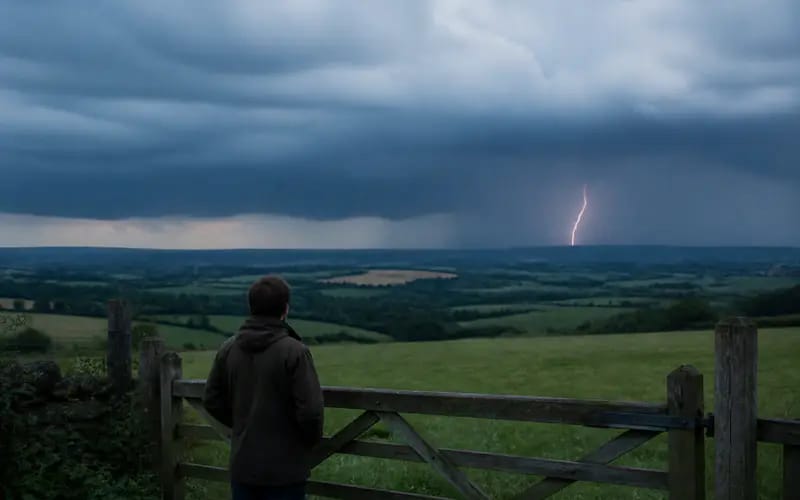
When a thunderstorm approaches, you can estimate the distance of the storm by counting. By definition, thunder and lighting occur at the same time, but light travels so fast that you see the lightning instantly, whereas sound takes time to arrive. The time between the lightning flash and the thunderclap can thus be used to estimate the distance of the storm.
The Simple Science Bit
Because light travels so fast, we see the lightning instantaneously. The thunder however travels much more slowly and we can measure the time between the sight of the lightning and the sound of the thunder. It takes approximately 5 seconds for sound to travel one mile (1.6km).
Counting Seconds Into Distance
Count off the seconds from the time you see the lightning to the time you hear the thunder. You can find out how far away a thunderstorm is from the flash-to-bang method of estimating distance to lightning as described by the Met Office. These figures are also useful for future reference.
Seconds counted / Distance in miles / Distance in km 5 seconds / 1 mile / 1.6 km 10 seconds / 2 miles / 3.2 km 15 seconds / 3 miles / 4.8 km 20 seconds / 4 miles / 6.4 km 25 seconds / 5 miles / 8 km 30 seconds / 6 miles / 9.6 km
So to recap – the table below shows how far away a storm is based on how many seconds it is since the flash of lightning. If the seconds pass quickly (and keep passing) then the storm is getting closer!
Distance, Not Direction
Remember that the count of seconds only tells you how far away a particular strike was. It does not tell you the direction of the storm. A storm can be moving straight towards you even though the gaps between the flash and thunder seem to be getting further apart on occasions. Watch the overall pattern over a few minutes and if the counts are generally getting shorter then the storm is getting closer to you.
Why Hearing Thunder At All Matters
Lightning can strike up to 10 miles away from the parent thunderstorm (as defined by Met Office advice on staying safe in thunder and lightning). This means that even if you can only just hear the thunder, you are already within striking distance. Don’t wait for further signs or a safe waiting period, the first sound of thunder is the signal for you to take action.
What To Do If You’re Outdoors
Stay away from tall isolated objects such as trees, lamp posts and flag poles as these attract lightning. Head for open spaces such as grassy areas, hilltops and bodies of water but be aware that you will become the tallest object in the area and therefore more likely to be hit by lightning. Go to solid buildings with roofs and walls. Cars with hard metal tops and closed windows are also safe as the metal of the car will conduct the electricity around you.
What To Do Once You’re Indoors
Of course, even when you are indoors, there are things that you can do to minimise the risks from lightning. So, the first thing is to stay away from windows and doors. Then, don’t touch any pipes or switch on any taps or showers. Water, combined with metal pipes, can conduct electricity through a building. It’s also worth unplugging non-essential appliances in case of a lightning strike and subsequent power surge. All of this can be done in advance of a thunderstorm and forms part of the preparation for severe weather that the Red Cross recommend for thunderstorms.
Hazards Particular To The UK
There are a few areas in the UK where lightning and even flash flooding can pose a significant hazard. Low-lying car parks, underpasses and river paths are known to collect water quickly and a car can become trapped or even swept away in shallow, fast flowing water. When driving and a storm suddenly hits, it’s best to avoid areas such as these and seek an alternative route. Also check the UK’s severe weather warnings before venturing out on the roads and be aware if the storm bringing the lightning is also likely to bring flash flooding in your area.
When It’s Safe To Go Back Out
A general rule of thumb is to wait 30 minutes after the last clap of thunder to venture outside again. The reason for this is that a storm can have appeared to have passed only to have more lightning later on from the rear of the storm cloud. Strikes close to people can cause serious injury including burns and cardiac arrest leading to collapse and possible death. Know what to do if someone is struck by lightning including calling 999 and commencing CPR if the person is unconscious and not breathing.
Thunderstorm Safety Checklist
Count seconds from the flash of lightning to the sound of thunder. Divide by 5 for miles or by 3 for kilometers.
Hear thunder? Go indoors.
Away from trees, poles and water outdoors.
Unplug non-essential appliances.
Be aware of low-lying car parks, underpasses and river areas which can flood quickly and turn into hazardous roads.