
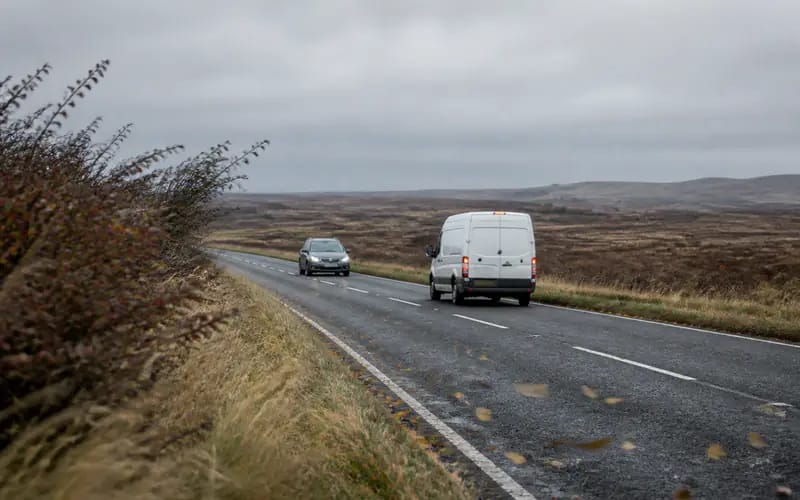
The high winds that are forecast for the UK over the next week or so are likely to be one of the most common reasons for delay in the autumn and winter months. So what are the wind speeds to look out for, what does the Beaufort scale mean when applied to driving and when is it better to delay your journey.
The Short Answer
By Force 7 (32 to 38mph), you’ll start to notice the effect of the wind when driving. By Force 8 (39 to 46mph), high sided vehicles, motorcycles and vehicles towing will be affected by cross winds and could be blown across a lane. So, as a rough guide, treat any gusts above 40mph with some caution and those above 50mph as something to be concerned about, particularly if you’re driving on exposed roads and are driving a van, caravan or lorry.
The Beaufort Scale In Driving Terms
Beaufort Scale of Wind Forces – A Guide for Motorists The Beaufort Scale is a system for estimating wind force developed by Irish Navy Officer Sir Francis Beaufort. The wind force scale was developed many years before cars were invented but is still the best method of expressing wind force as a number for use by sailors and motorist alike. Under Force 6 (strong breeze: 25-31mph) the wind is noticed by a car driver but does not normally cause problems in normal driving. Force 7 (near gale: 32-38mph) needs a small correction to steering, particularly when passing through narrow gaps between buildings or hedges. Force 8 (gale: 39-46mph) can cause high-sided vehicles and motorcyclists to be affected by cross-winds and forced off course. Above Force 9 (47mph +) most careful drivers will begin to consider delaying their journey.
What The Highway Code Actually Says
The Highway Code does not specify a wind speed to stay off the roads but does provide information on how high speed gusts of wind can affect driving and gives examples of the types of situations where there could be an increased risk of accidents and how other road users could be affected by high speed gusts of wind. This information is given within the section on extra care needed in specific circumstances and is aimed at all road users with a particular emphasis on vulnerable road users. Importantly, the information highlights why vulnerable road users would need more space when driving in windy conditions than in calm weather.
Which Vehicles Struggle Most
It is well to remember that a small hatchback with a low profile is likely to experience very little in the way of wind influence when driving in strong winds, unless loaded of course. However, large flat surfaces on the roofs of tall vehicles such as box-shaped vans, horseboxes, caravans and motorcycles can create all manner of problems when subject to high velocity gusts of air. The added influence of high luggage on roof racks and boxes raises the vehicle’s centre of mass and increases surface area, which in turn, can create quite dramatic changes to a vehicle’s behaviour in strong winds when previously it had proven to be quite inert in similar conditions.
Exposed Roads And Bridges
However, wind speed can vary greatly from road to road. In general coastal roads, viaducts and motorway bridges over wide estuaries will experience greater winds than country lanes. Therefore it is wise to check for any bridge restrictions for high sided vehicles before embarking on a long journey and for any last minute closure. Such closures are usually announced in advance of the worst of the weather. If you want what wind speed is dangerous for driving, https://weathernearme.co.uk/weather-terms-explained/ is a good place to start.
Driving Technique In Gusty Weather
If you do have to travel, remember to drive slowly and leave plenty of space between you and other cars. A loose grip on the steering wheel is much better than holding on tight and try to drive slowly through gap situations such as bridges, trees and cuttings. Leave plenty of space between yourself and other cars on the road and try to give motorcyclists, cyclists and people in horse-drawn vehicles as much room as possible.
Myth-Check: Wind Alone Rarely Closes Roads
Wind on its own does not cause road closures. It is generally heavy rain, flooding, ice etc. that covers a road and causes a closure when it becomes difficult to drive on it safely. The figure of wind speed quoted in weather forecasts often is an average speed over a long period and can be very different from the short, sharp gusts of wind which can affect vehicles. These gusts can be much higher than the average wind speed quoted.
A Quick Decision Framework
Less than 30mph gusts: drive normally and keep both hands on the wheel.
30-50mph: Try and avoid travelling on exposed roads and take extra care when passing motorcyclists, cyclists and large vehicles such as lorries. Give them plenty of space and allow extra time to react should they be affected by a gust of wind.
Gusts above 50mph: Take care and consider postponing your journey, particularly if you’re towing a trailer or are driving a high vehicle.
Check for bridge closures or restrictions before setting off.