
Pull your passport out of the kitchen drawer. Go on, it'll only take a minute. Now open the front cover and read the bit at the top – the part printed in three languages that most people's eyes slide straight over. In the UK version, it asks "all those whom it may concern" to allow the bearer to pass freely. It's been there so long it feels like wallpaper. Ceremonial, you assume. Polite. The state clearing its throat before you go on holiday.
It isn't, quite. That wording is a ghost – a remnant of a specific legal power, the Royal Prerogative, that the Crown used at various panicked moments in British history not to wave people cheerfully through borders but to stop them leaving altogether. The passport you've been using to get to Lanzarote is the descendant of a control instrument. Which is a strange thing to discover on a Tuesday afternoon.
The Document That Arrived With a Lock, Not a Key
Before 1914, a British passport was not a legal requirement. It was closer to a letter of introduction – something a well-connected traveller might carry to smooth things along with foreign officials, but which nobody was obliged to have. You could, more or less, simply leave. The state wasn't particularly interested in tracking the outbound traffic.
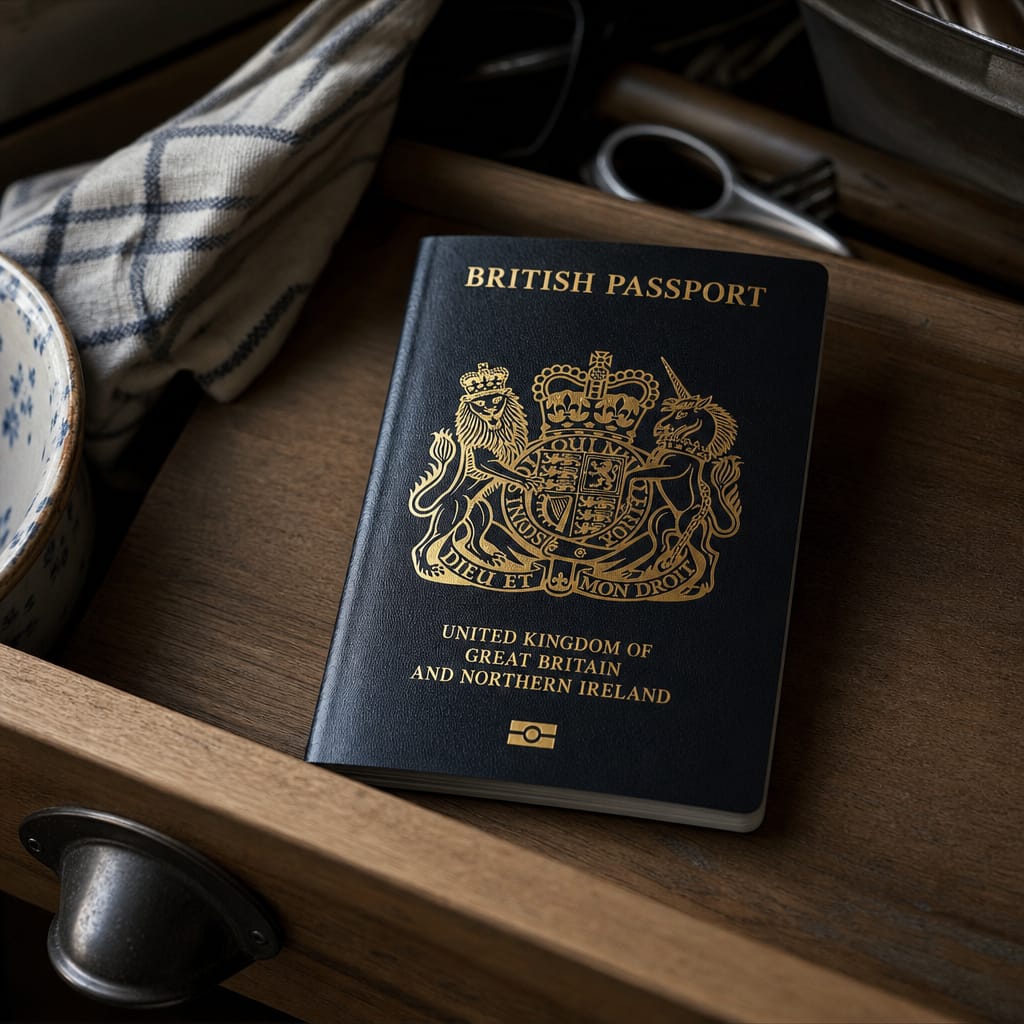
Then came the First World War. With it came the British Nationality and Status of Aliens Act 1914. Passed at remarkable speed in August of that year, this piece of legislation made carrying a passport compulsory for the first time. The stated concern was enemy aliens – people the government needed to monitor and, where possible, prevent from slipping away. But the mechanism it created was blunter than that. It applied broadly. For the first time, the British state had a legal instrument that attached a citizen's right to travel to a document the state itself issued and could, in principle, decline to issue.
The freedom to leave, in other words, was suddenly conditional.
The Awkward History of "Allowing" You to Go
This matters because of what it reveals about the relationship between the state and the traveller. When you apply for a passport today, you probably think of yourself as claiming a right. The legal reality is marginally more complicated. A British passport is still issued under the Royal Prerogative – which means it's technically granted by the Crown, not guaranteed by statute in quite the way your right to vote is. Courts have generally protected this in practice, but the underlying structure means the government retains, in theory, the power to refuse or withdraw a passport without the same parliamentary constraints that apply elsewhere.
This has happened in living memory, by the way. During various moments of political anxiety – not just 1914 but periodically through the Cold War – passports were withheld from individuals the government considered inconvenient travellers. No trial. No charge. Just a quiet administrative decision.
The Loophole Everybody Books Their Summer Through
None of which means you should feel gloomy picking up your passport for a week in Seville. The point is odder and more interesting than that. The freedom to travel that a passport seems to grant isn't, historically, what the document was designed to do. It's what the document got repurposed into doing once the emergency passed – and it turned out that a standardised international travel document was also quite convenient for everyone. Governments, border officials, airlines booking seats under names. The freedom crept in sideways.
Which is a peculiarly British way for a freedom to arrive. Not declared, not legislated, not won in a clean historical moment, but accumulated gradually as a side effect of a bureaucratic system that was originally pointing the other way.
What the First Page Is Actually Asking
So next time you're in the queue at the airport, passport ready, slightly anxious about whether you remembered the adaptor, spare a thought for what the document in your hand actually is. That polite request to let you pass freely? It's addressed to foreign governments. Your own government wrote the thing. The request, technically, flows the other way.
You're not being given permission to leave, exactly. You're being lent a key that the state has always kept a copy of, by an institution that invented the lock. Millions of people use it every year with no bother at all. It's just not quite the permission slip it looks like, held up to the light.
FAQ
Was a passport always compulsory for British travellers?
No. A British passport was not a legal requirement before 1914 and functioned in much the same way as a letter of introduction – enabling well-connected travellers to ease dealings with officials abroad. Until then, travellers were more or less free to come and go. Compulsory passports only arrived as part of the British Nationality and Status of Aliens Act 1914, passed in August of that year.
Why did the 1914 Act make passports compulsory?
The stated aim of this requirement was enemy aliens during the First World War, and it was intended to allow their monitoring and to prevent them slipping away. However, the requirement applied generally to all citizens and governed their right to travel abroad by reference to a document issued by the State which could be refused.
Is a British passport issued under the Royal Prerogative?
Yes. A British passport is still issued under the Royal Prerogative (as opposed to for example the right to vote, which is given by statute), so it is technically granted by the Crown. In practice the courts generally protect it, but in theory the government can refuse or withdraw one without the usual parliamentary constraints.
Who is the request on the first page of a passport addressed to?
The document is addressed to foreign governments and contains a notice asking “all those whom it may concern” to permit the bearer to pass freely. Your own government wrote it, so it is not permission to leave, but a request to others to let you through.